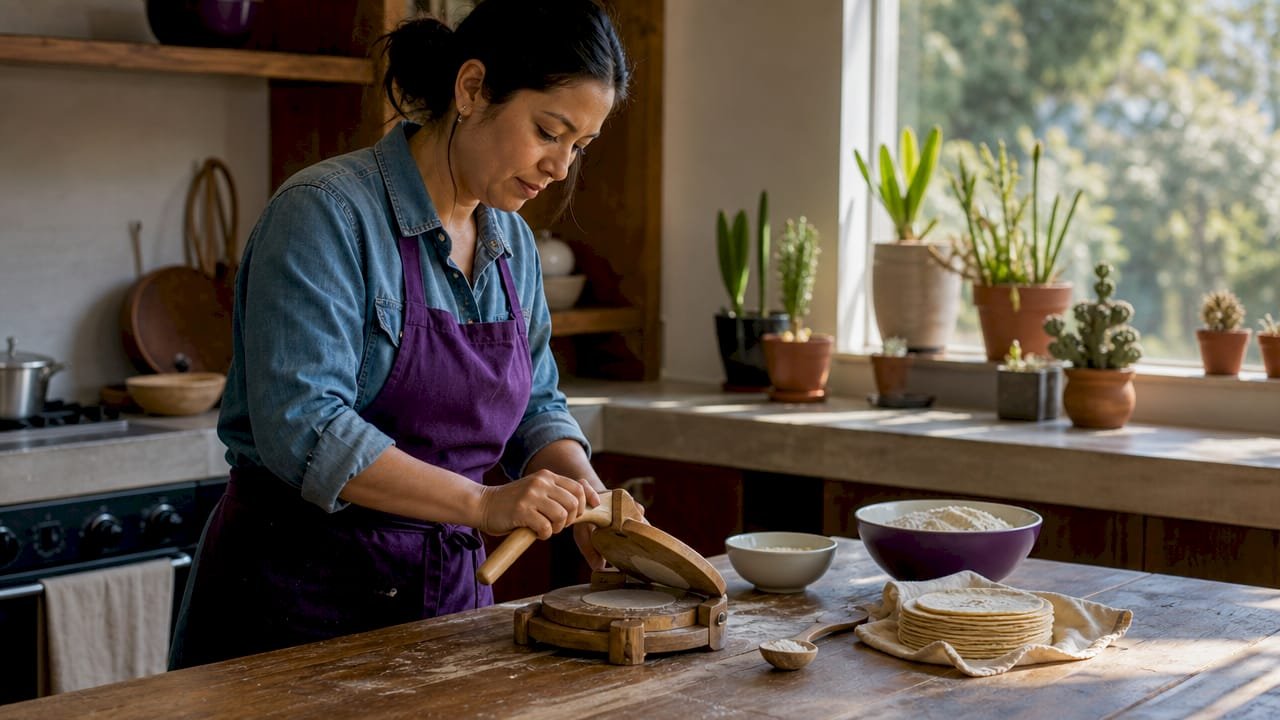
Supporting local restaurants is one of the most direct ways to strengthen your community’s economy, environment, and cultural identity. Every dollar you spend at an independent eatery keeps roughly 70 cents circulating locally through wages, supplier payments, and owner spending. That figure dwarfs what national chains return to the same community. Local dining also connects you to regional farmers, preserves culinary traditions, and funds the public services your neighbourhood depends on. In Winnipeg, restaurants like Burritosplendido have built their entire model around this idea, sourcing from Manitoba farms and pressing tortillas from 100% Manitoba-produced flour daily.
Why support local restaurants: the economic case
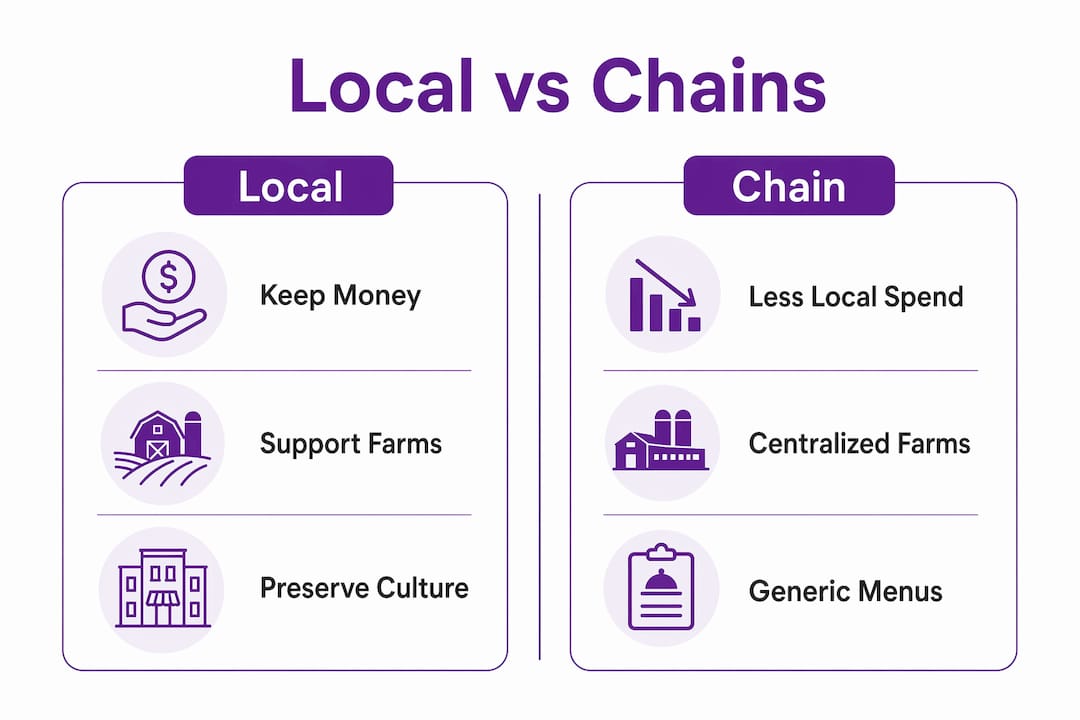
The economic argument for choosing independent eateries over national chains is grounded in the local multiplier effect. When you spend money at a local restaurant, that money pays wages to employees who live nearby, purchases ingredients from regional suppliers, and funds the owner’s own household spending. Local spending multiplies as it moves through interconnected small businesses, farms, and service providers in the same community. A dollar spent at a national chain, by contrast, flows quickly out of the region to corporate headquarters and distant shareholders.
Local restaurants also function as civic participants. Tax revenue generated by independent eateries stays within the local tax base, funding schools, roads, and public services. Local restaurants fund public services in ways that absentee-owned chains structurally cannot. The closure of a well-loved neighbourhood spot is not just a cultural loss. It is a measurable reduction in community infrastructure.
The table below illustrates how spending patterns differ between local and chain restaurants.
| Economic factor | Local independent restaurant | National chain |
|---|---|---|
| Share of spending kept local | Roughly 70 cents per dollar | Significantly lower |
| Supplier relationships | Regional farms and vendors | Centralised national distributors |
| Employee wages spent locally | High (staff live nearby) | Mixed (management may relocate) |
| Tax revenue destination | Local municipality | Split across multiple jurisdictions |
| Community reinvestment | Owner spends locally | Profits leave the region |
The contrast is stark. Choosing a local eatery for lunch is a financial decision with consequences that ripple outward for days and weeks after the meal.
Pro Tip: Ask your favourite local restaurant which suppliers they use. Restaurants that name specific local farms or producers are the ones keeping the most money in your community.
The benefits of local dining extend well beyond the meal itself. Every visit contributes to a network of farmers, bakers, cheese makers, and delivery drivers who all depend on that restaurant staying open.
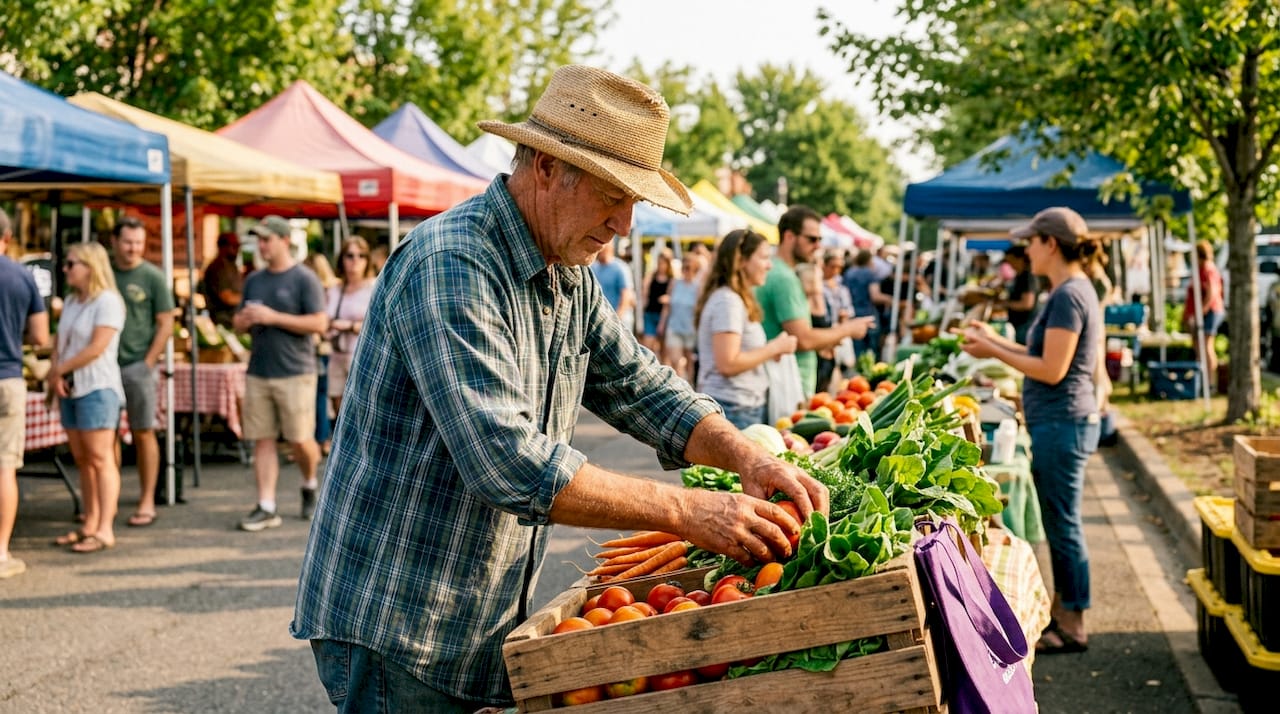
How do local restaurants support sustainable farming?
Local restaurants are the most reliable buyers many small farms have. When a restaurant commits to sourcing from a regional producer, that farm gains the stable revenue needed to invest in better practices. Regenerative agriculture is a greater environmental factor than transportation distance alone. This means the real environmental benefit of eating locally comes from supporting farms that build soil health, protect biodiversity, and reduce chemical inputs, not simply from cutting food kilometres.
Consumer demand for locally sourced food has driven measurable growth in small-scale farming. The number of small farms in the United States increased by 20% over six years as buyers sought out regional producers. That trend reflects a direct link between where people choose to eat and the agricultural practices that get funded as a result.
Local food supply chains also carry a smaller environmental footprint in other ways. Local food sold direct-to-consumer requires less packaging and shorter storage times, reducing energy use across the supply chain. Shorter cold chains mean less refrigeration, less plastic wrap, and less food waste before the product reaches your plate.
Burritosplendido sources its pork from local Manitoba farms, its poultry from Granny’s Chicken, and its cheese from Bothwell Cheese. Its fresh produce comes primarily through Peak of the Market. These are not marketing claims. They are named supplier relationships that connect every meal to specific Manitoba agricultural operations. Read more about this approach in Burritosplendido’s farm to fork story.
Pro Tip: When reading a restaurant menu, look for named farms or producers rather than vague phrases like “locally inspired.” Specific supplier names signal a genuine sourcing commitment.
Understanding why support local farmers matters as much as understanding why you eat at independent restaurants. The two are inseparable. The restaurant is the farmer’s most consistent customer.
Why do local restaurants preserve culture and community identity?
Independent restaurants are the primary keepers of culinary diversity in any city. Local chefs reflect regional cooking traditions and immigrant culinary heritage through menus that no corporate test kitchen would ever approve. A standardised chain menu is designed to perform identically in Winnipeg, Calgary, and Halifax. A local restaurant’s menu is designed for the people who live on that specific street.
The cultural stakes are high. Independent restaurants preserve cultural diversity in ways that standardised chains structurally cannot. When a local restaurant closes, the recipe knowledge, the supplier relationships, and the gathering space it provided do not transfer to whatever replaces it. Often, what replaces it is a chain or a vacancy.
Here is what local restaurants actually contribute to community identity:
- Authentic culinary traditions. Local chefs bring recipes rooted in family history, regional ingredients, and cultural memory. Burritosplendido’s Manitoba Whitefish and Pickerel tacos are a direct expression of what the province produces seasonally.
- Social gathering spaces. Independent eateries function as neighbourhood anchors where regulars build relationships over time. That social fabric does not exist at a drive-through.
- Chef-driven creativity. Local owners can change their menu based on what is fresh, what is in season, and what their customers are asking for. Chains cannot.
- Economic storytelling. Every locally sourced ingredient on a menu tells a story about a specific farm, a specific region, and a specific set of values. That story connects diners to the land around them.
Winnipeg’s food scene reflects this directly. Restaurants that source from Manitoba producers and celebrate regional flavours give the city a culinary identity that no franchise can replicate. Explore how locally rooted cuisine connects food to place and community.
What are the best ways to support local restaurants in Winnipeg?
Supporting small eateries does not require a large budget or a dramatic lifestyle change. The most effective approach is consistent, informed patronage combined with a few deliberate habits.
- Eat there regularly. Frequency matters more than occasion. A local restaurant’s survival depends on reliable weekday traffic, not just special-night visits.
- Use loyalty programmes and curbside discounts. Many local restaurants offer 10% loyalty discounts to close the price gap with national chains. These programmes reward regulars and help the restaurant plan inventory.
- Order takeout directly. Third-party delivery apps charge restaurants fees that can consume a significant share of each order’s value. Calling directly or ordering through the restaurant’s own website keeps more money with the business.
- Book catering for events. Local restaurants that offer catering bring their sourcing philosophy to your event. Burritosplendido’s local ingredient catering in Winnipeg is a practical way to support local food systems at scale.
- Attend local food events. Farmers’ markets, food festivals, and pop-up dinners connect you to the broader ecosystem of producers and chefs that local restaurants depend on.
- Leave reviews and share on social media. Word of mouth remains the most cost-effective marketing a small restaurant has. A specific, honest review on Google or social media reaches people the restaurant cannot afford to advertise to.
The comparison below shows how different support methods stack up in terms of impact and effort.
| Support method | Community impact | Effort required |
|---|---|---|
| Regular dining visits | High (direct revenue) | Low |
| Direct takeout orders | High (avoids platform fees) | Low |
| Catering bookings | Very high (large order value) | Medium |
| Social media sharing | Medium (awareness) | Low |
| Attending food events | Medium (ecosystem support) | Medium |
The local food ordering benefits are clearest when you combine regular visits with direct ordering. Both habits together maximise the share of your spending that stays in the community.
Key takeaways
Supporting local restaurants is the single most direct way to keep money, culture, and agricultural knowledge rooted in your community.
| Point | Details |
|---|---|
| Economic multiplier | Roughly 70 cents of every dollar spent locally recirculates through wages, suppliers, and owner spending. |
| Farming connection | Local restaurants are the most reliable buyers for small farms using regenerative practices. |
| Cultural preservation | Independent eateries protect culinary diversity and community identity that chains cannot replicate. |
| Practical support | Direct ordering, loyalty programmes, and catering bookings maximise the impact of your spending. |
| Civic contribution | Local restaurant tax revenue funds public services in ways that absentee-owned chains do not. |
What I’ve learned from years of watching local restaurants fight to survive
I have watched enough local restaurants open and close to know that the difference between survival and closure is rarely the quality of the food. The restaurants that close are often the ones whose regulars drifted toward convenience. A chain opened nearby, or a delivery app made it easier to default to something familiar. The food at the local spot was better. The sourcing was more honest. But the habit of going there was not strong enough.
What strikes me most about places like Burritosplendido is that their sourcing model is not a marketing exercise. Naming Bothwell Cheese, Granny’s Chicken, and Peak of the Market on your supply list means you have made commitments that cost more and require more coordination than ordering from a national distributor. That is a deliberate choice to prioritise community over margin.
The cultural argument for supporting local eateries is the one I find most underappreciated. People talk about the economic multiplier, and they should. But the loss of a local restaurant is also the loss of a specific kind of social space. The table where the same group of friends has met every Friday. The counter where a chef explains what is in season this week. Those things do not transfer to whatever opens next. They are gone.
My honest advice: pick two or three local restaurants you genuinely enjoy and make them a habit. Not an occasional treat. A habit. That consistency is worth more to those businesses than any single large purchase.
— Austin
Burritosplendido: where local sourcing meets every meal
Burritosplendido has built its entire menu around the principle that local ingredients produce better food and stronger communities. Every tortilla is pressed daily from 100% Manitoba-produced flour. Every protein, from slow-braised Carnitas to hand-pulled Barbacoa, is prepared from scratch using regionally sourced meat.
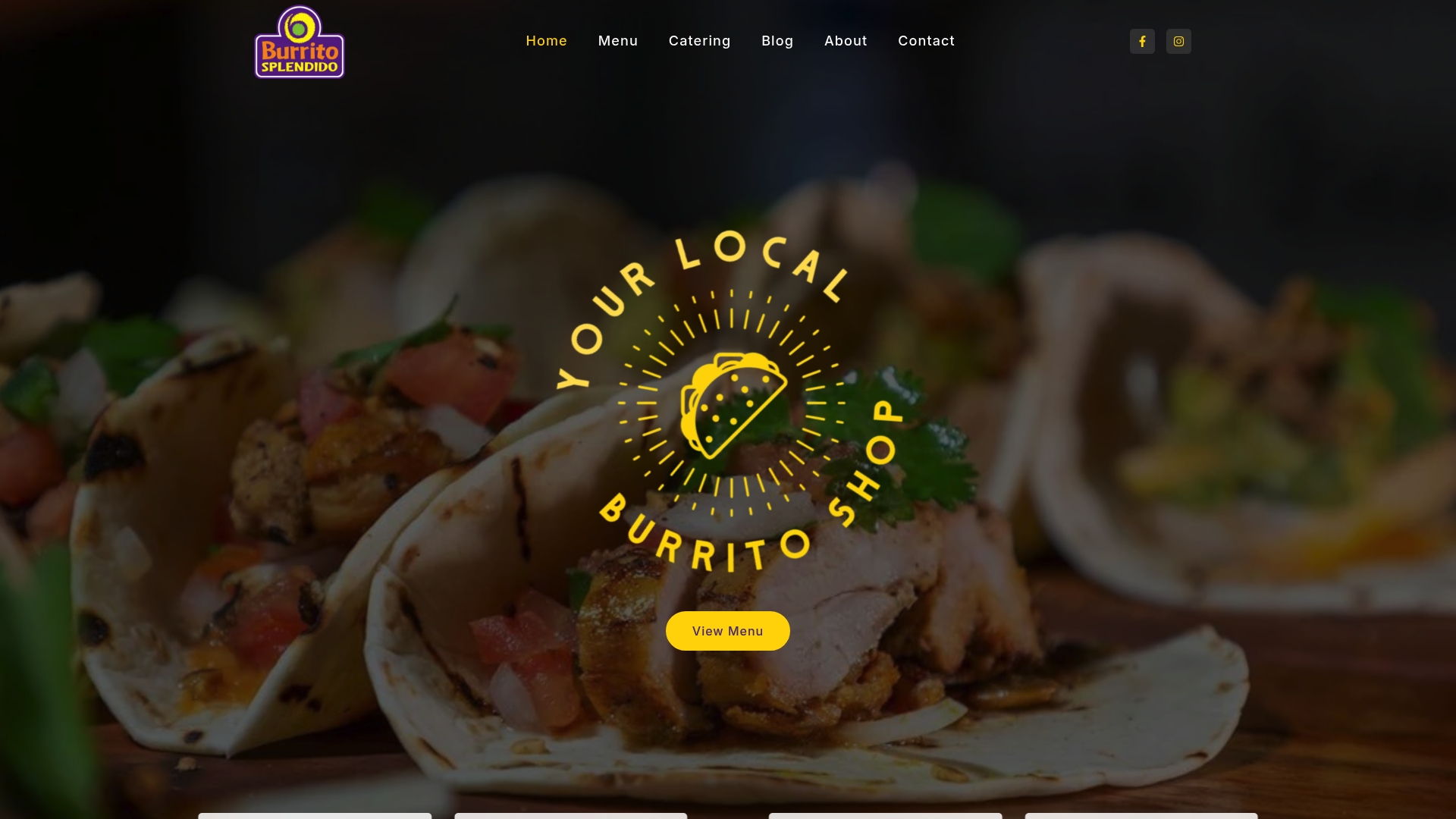
For community events, corporate gatherings, or family celebrations, Burritosplendido’s catering services bring that same Manitoba-first sourcing philosophy to your table. The menu covers gluten-free, vegan, and keto options, so every guest is accommodated without compromise. With locations across Winnipeg and Brandon, Burritosplendido makes it straightforward to eat locally and eat well, every single day.
FAQ
Why does spending at local restaurants matter more than at chains?
Roughly 70 cents of every dollar spent at a local independent restaurant recirculates within the local economy through wages, supplier payments, and owner spending. National chains return a significantly smaller share to the communities where they operate.
Do local restaurants actually support local farms?
Local restaurants are often the most consistent buyers small regional farms have. Supporting these restaurants directly funds farms that use regenerative practices, which benefit soil health and biodiversity more than transportation distance alone.
What is the easiest way to support local restaurants regularly?
Dining in or ordering directly from the restaurant (rather than through third-party delivery apps) is the highest-impact, lowest-effort habit. Many local eateries also offer loyalty discounts to make regular visits more affordable.
What happens when local restaurants close?
Closure of local restaurants leads to permanent loss of unique culinary culture, community gathering spaces, and local supplier relationships. The replacement is typically a chain or a vacant storefront.
Does Burritosplendido source from local Manitoba farms?
Burritosplendido sources pork from local Manitoba farms, poultry from Granny’s Chicken, cheese from Bothwell Cheese, and fresh produce through Peak of the Market. Its tortillas are pressed daily from 100% Manitoba-produced flour.