Tortillas are often reduced to a convenient wrap, a vehicle for fillings, or a simple substitute for bread. That framing misses almost everything that matters. Originating in ancient Mesoamerica roughly 10,000 years ago, tortillas carry the weight of civilisations, rituals, and daily family life within every pressed circle of masa. They are the foundation of Mexican cuisine, not a backdrop to it. This guide walks you through the history, science, regional variety, and cultural significance of tortillas so that the next time you bite into a taco or quesadilla, you understand exactly what you are tasting and why it matters.
Table of Contents
- Tracing the origins: From ancient Mesoamerica to the modern table
- Nixtamalization: The science and artistry behind every tortilla
- Corn vs. flour: Regional traditions and choosing the right tortilla
- Tortillas on the plate: Iconic Mexican dishes and everyday customs
- A Canadian perspective: Why tortillas matter more than you think
- Discover authentic Mexican flavours in Canada
- Frequently asked questions
Key Takeaways
| Point | Details |
|---|---|
| Ancient roots | Tortillas have been a foundational food in Mexican culture for over 10,000 years. |
| Nixtamalization’s impact | This traditional process boosts nutrition, flavour, and authenticity of Mexican tortillas. |
| Regional identity | Corn and flour tortillas are paired with specific dishes based on Mexico’s diverse regional traditions. |
| Culinary versatility | Tortillas serve as edible vessels, plates, and the starting point for many classic Mexican recipes. |
Tracing the origins: From ancient Mesoamerica to the modern table
Few foods on earth can claim the unbroken cultural lineage of the tortilla. Long before European contact reshaped the Americas, corn was sacred. It fed populations, anchored economies, and sat at the centre of spiritual belief systems across Mesoamerica. The tortilla grew directly from that relationship.
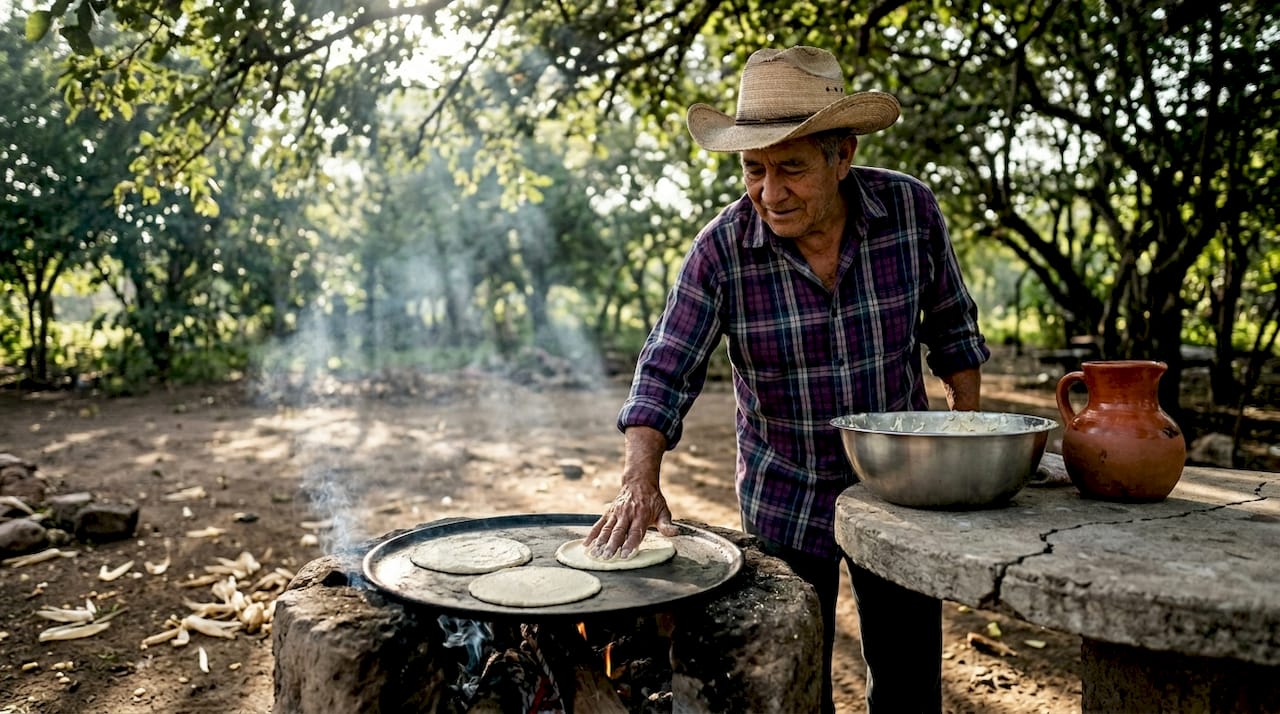
Tortillas originated roughly 10,000 years ago as a flatbread made from nixtamalized corn masa. The Aztecs called them tlaxcalli, and they were consumed daily across every social class, from the royal court to farming communities. When Spanish colonisers arrived in the 16th century and encountered these thin, round flatbreads, they named them tortillas, meaning “little cakes” in Spanish. The Aztec name faded in common use, but the food itself never did.
What made the tortilla so enduring was not just taste. It was practicality. Corn grew abundantly across Mesoamerica, and nixtamalized masa kept well enough for daily preparation. Tortillas required no oven, no yeast, no leavening. A flat stone called a comal over an open fire was all the equipment needed. That accessibility made them universal.
| Period | Key development |
|---|---|
| ~10,000 BCE | First corn cultivation and early flatbreads in Mesoamerica |
| ~1500 BCE | Nixtamalization practised by Olmec and Maya civilisations |
| 1300s CE | Aztec empire; tlaxcalli central to daily diet and ritual |
| 1500s CE | Spanish colonisation; renamed “tortilla” |
| 1987 | Corn tortilla production mechanised widely in Mexico |
| 2010 | UNESCO recognises Mexican cuisine as Intangible Cultural Heritage |
The cultural symbolism runs deep. In Aztec and Maya cosmology, corn represented the sun and the cycle of life. Tortillas were not merely food; they were offerings, symbols of hospitality, and expressions of community. Handmaking tortillas was traditionally a skill passed from mother to daughter, a domestic art that carried social meaning and family identity.
“The tortilla is not just a staple food in Mexico. It is a symbol of identity, of the sun, and of the cycle of life itself, woven into the daily rhythms of family, hospitality, and community for thousands of years.”
UNESCO’s recognition of Mexican cuisine as Intangible Cultural Heritage in 2010 placed the tortilla squarely within a global conversation about food as living culture. It is not nostalgia. It is an active, breathing tradition that shapes how millions of people eat, celebrate, and connect every single day.
Nixtamalization: The science and artistry behind every tortilla
With the history in mind, understanding the secret behind great tortillas means exploring nixtamalization. This word sounds technical, but the concept is elegantly simple. It is also the single most important factor separating a truly authentic tortilla from a pale imitation.
Nixtamalization involves soaking and cooking dried corn in an alkaline solution of lime water, specifically calcium hydroxide, then steeping it overnight before rinsing away the loosened hulls and grinding the softened kernels into a smooth, pliable dough called masa. That dough is then pressed and cooked on a comal. The process sounds straightforward, but its effects are extraordinary.
Here is what nixtamalization actually does, step by step:
- Alkaline soaking breaks down the pericarp (the tough outer hull of the corn kernel), making the grain far easier to grind and digest.
- Calcium absorption increases dramatically as the lime water infuses the corn, providing a meaningful dietary source of calcium.
- Niacin (vitamin B3) becomes bioavailable, which is critical. Untreated corn contains niacin in a bound form the human body cannot absorb. Nixtamalization frees it, preventing pellagra, a severe vitamin deficiency disease.
- Flavour compounds develop during the alkaline cooking process, creating the distinctive earthy, slightly mineral taste that defines authentic corn tortillas.
- Protein structure changes, giving masa its unique binding quality so it holds together without eggs, oil, or gluten.
Pro Tip: When shopping for corn tortillas in Canada, look for “masa de maíz nixtamalizado” in the ingredient list rather than plain “corn flour.” The distinction signals whether the producer used the authentic process or a shortcut.
Fresh nixtamal masa, ground the same day and pressed into tortillas, produces a flavour and texture that masa harina (dried, powdered masa) simply cannot replicate. Masa harina is convenient and widely available across Canada, and it makes perfectly acceptable tortillas at home. But fresh masa carries a complexity, a slight tang and a toasty depth, that reminds you this food has a history.
For Canadians seeking authenticity, Latin grocery stores in cities like Winnipeg, Toronto, and Calgary often stock fresh masa or freshly pressed tortillas from local producers. The difference in taste is immediate and unmistakable. Once you have tried a warm, fresh corn tortilla made from real nixtamal masa, the packaged supermarket variety feels like a completely different food.
Corn vs. flour: Regional traditions and choosing the right tortilla
Once you recognise how tortillas became essential, it is just as crucial to understand which tortilla makes each dish shine. The corn versus flour debate is not a matter of preference. It is a matter of history, geography, and culinary function.
Corn tortillas are the traditional choice across central and southern Mexico, regions where indigenous food traditions remained strongest after colonisation. They carry an earthy flavour, a pleasantly chewy texture, and a slight grittiness that holds up beautifully under sauces, char from a grill, or the heat of a comal. They are smaller, typically 15 cm or less, and naturally gluten-free with higher fibre content than their flour counterparts.
Flour tortillas came later, emerging in northern Mexico during the 16th and 17th centuries after Spanish colonisers introduced wheat cultivation. In the arid northern states like Sonora and Chihuahua, wheat grew more reliably than corn. Flour tortillas became the staple of the north, and they crossed into Texas and the American Southwest, eventually becoming the dominant tortilla in Tex-Mex cuisine and most North American Mexican restaurants.
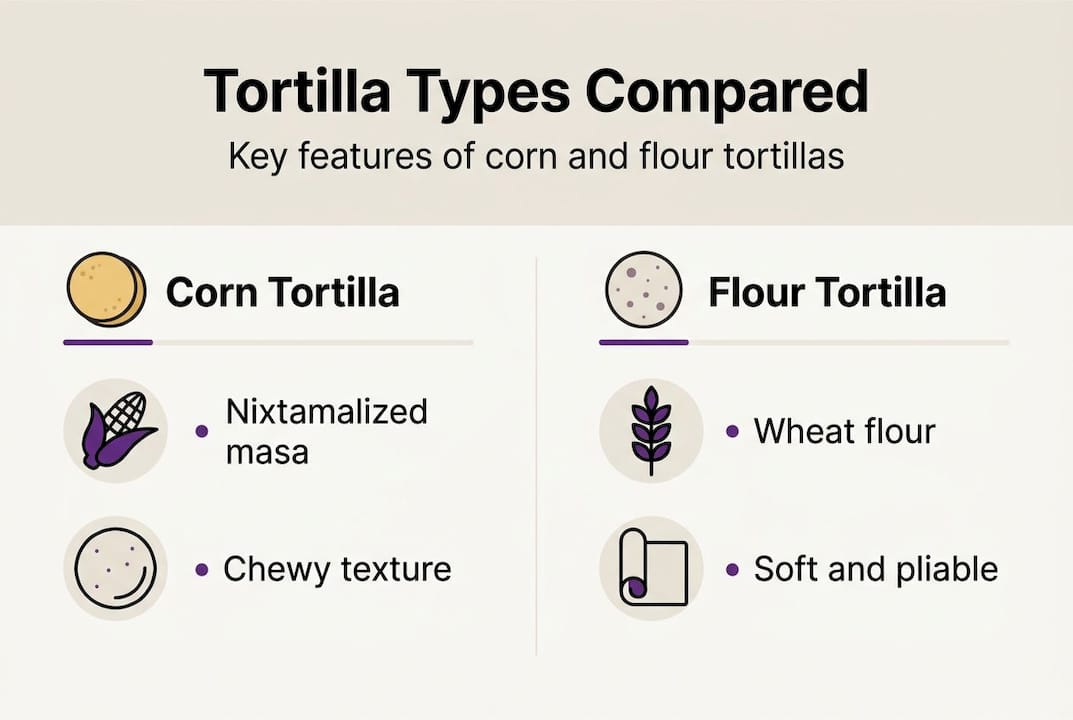
| Feature | Corn tortilla | Flour tortilla |
|---|---|---|
| Origin | Indigenous Mesoamerica | Post-conquest northern Mexico |
| Main ingredient | Nixtamalized corn masa | Wheat flour |
| Texture | Chewy, slightly firm | Soft, pliable, stretchy |
| Flavour | Earthy, mineral, complex | Mild, neutral, slightly buttery |
| Size | Small (10 to 15 cm) | Medium to large (20 to 35 cm) |
| Gluten-free | Yes | No |
| Best for | Tacos, enchiladas, tostadas, flautas | Burritos, quesadillas, wraps |
The practical difference matters enormously in cooking. Corn tortillas, when warmed directly on a flame or comal, develop a slight char and a pliable structure that wraps around taco fillings without competing with them. Flour tortillas, with their neutral flavour and stretchy texture, can hold the volume of a burrito or the weight of a heavily filled quesadilla without tearing.
Substituting one for the other is not always disastrous, but it changes the dish. An enchilada made with flour tortillas becomes soggy under sauce because flour absorbs liquid differently than masa. A burrito wrapped in a corn tortilla cracks and crumbles because corn masa lacks the gluten structure needed for that kind of stretch.
If you are curious about how Mexican street food in Winnipeg balances these traditions, or how local ingredients in Mexican food can elevate both tortilla types, the regional logic behind each choice becomes even clearer when you see it applied in practice.
Key points to remember when choosing your tortilla:
- Street tacos: Always corn. The small size and flavour are non-negotiable for authenticity.
- Enchiladas: Corn, lightly fried before rolling to prevent sogginess.
- Burritos: Flour, large and pliable enough to seal a full meal inside.
- Quesadillas: Either works, but flour gives a crispier, more even sear.
- Chilaquiles: Corn, torn and fried, then simmered in salsa.
Tortillas on the plate: Iconic Mexican dishes and everyday customs
Now that you can tell corn from flour, it is time to appreciate tortillas’ starring roles in the most beloved Mexican recipes and rituals. The tortilla is not just an ingredient. It is often the plate, the utensil, and the edible container all at once.
Tortillas function as edible plates and utensils across Mexican cuisine, forming the structural and flavour foundation of dishes like tacos, enchiladas, quesadillas, chilaquiles, and tamales. In traditional Mexican dining, you do not always reach for a fork. You tear a piece of tortilla, fold it, and use it to scoop up beans, stew, or salsa directly from the bowl. This practice, called hacer la tortilla, is deeply ingrained in Mexican table culture.
Consider the range of dishes that depend entirely on the tortilla:
- Tacos: A warm tortilla folded around seasoned meat, fresh salsa, onion, and cilantro. The tortilla must be thin enough to fold without cracking but sturdy enough to hold juicy fillings.
- Enchiladas: Corn tortillas briefly fried, rolled around chicken or cheese, and blanketed in red or green sauce. The frying step is essential; it creates a moisture barrier.
- Quesadillas: Two tortillas (or one folded) filled with cheese and toasted until golden. The tortilla’s direct contact with heat creates flavour through the Maillard reaction.
- Chilaquiles: Torn corn tortillas fried until crispy, then simmered in salsa until they absorb just enough liquid to soften slightly. Texture is everything here.
- Tamales: Masa spread onto corn husks, filled, and steamed. Technically a different preparation, but rooted in the same nixtamalized corn tradition.
The grocery’s role in culinary traditions extends to tortillas in Mexican households, where fresh masa or freshly pressed tortillas are often a daily purchase rather than a weekly one. Freshness is not optional; it is the standard.
Pro Tip: To warm corn tortillas properly at home, place them directly on a gas burner for 15 to 20 seconds per side, or in a dry cast-iron pan over medium-high heat. Stack them in a clean tea towel as you go to trap steam and keep them pliable.
Handmaking tortillas remains a communal act in many Mexican families and communities. Grandmothers teach grandchildren the feel of properly hydrated masa, the right pressure on the tortilla press, the sound of a tortilla ready to flip. If you want to explore making burritos with Canadian ingredients or master a 12-step taco assembly, understanding the tortilla’s role in each dish is the essential first step.
A Canadian perspective: Why tortillas matter more than you think
Here is the honest truth that most food content avoids: Canadians have largely been sold a shortcut version of Mexican cuisine, and the tortilla is where that shortcut is most visible. Walk into any grocery store and you will find stacks of shelf-stable flour tortillas that last weeks at room temperature. They are convenient. They are also a completely different food from what a tortilla is supposed to be.
We believe that choosing a tortilla is a culinary decision with real consequences. A fresh-pressed corn tortilla made from nixtamalized masa does not just taste better. It connects you to a 10,000-year-old tradition that shaped civilisations. Using it correctly, pairing it with the right dish, warming it properly, and respecting its structure, is how you honour that tradition rather than flatten it into a generic wrap.
For Canadians who want to eat Mexican food authentically, the tortilla is the place to start. Seek out nixtamalized corn tortillas from Latin grocers. Try making masa at home with masa harina as a starting point. Notice the difference between a taco served in a warm corn tortilla versus a flour one. That difference is not trivial. It is the whole story.
Discover authentic Mexican flavours in Canada
Ready to taste and share the difference genuine tortillas make?
At Burrito Splendido, we press our tortillas fresh daily using 100% Manitoba-produced flour, and we source gluten-free soft corn tacos from La Cocina to honour the corn tradition authentically. Every protein, from slow-braised Carnitas to hand-pulled Barbacoa, is built around the tortilla it belongs in.
Whether you are planning a meal for your family or looking at Mexican catering options for your next event, we bring the same care to every tortilla we press. If you want to understand why Burrito Splendido is the top choice for Mexican food in Canada, it starts with this commitment to doing things properly. Visit us and taste what a thoughtfully made tortilla actually feels like.
Frequently asked questions
What is the main difference between corn and flour tortillas?
Corn tortillas use nixtamalized masa and deliver a chewy, earthy flavour rooted in central and southern Mexican tradition, while flour tortillas are softer, more pliable, and trace their origins to northern Mexico after Spanish colonisation introduced wheat.
Why is nixtamalization important in tortilla making?
Nixtamalization enhances flavour, texture, and nutrition by freeing niacin, adding calcium, and creating the binding quality in masa that makes authentic tortillas possible without any added gluten or leavening agents.
How do tortillas influence Mexican dining customs?
Tortillas act as edible plates and utensils in traditional Mexican meals, used to scoop, wrap, and hold food in dishes ranging from tacos and enchiladas to quesadillas and chilaquiles, making them central to both everyday eating and festive hospitality.
Can you substitute flour tortillas for corn in all dishes?
No. Corn and flour tortillas are not interchangeable across all recipes because their textures, flavours, and structural properties suit different dishes, and substituting one for the other can significantly alter the result and authenticity of the meal.
Recommended
- How to make authentic burritos with Canadian ingredients – Burrito Splendido
- How to assemble perfect tacos in 12 steps: local flavours – Burrito Splendido
- Authentic Mexican street food: Top picks to try in Winnipeg – Burrito Splendido
- Craving Authentic Flavors? Why Burrito Splendido is the Top Choice for Mexican Food in Canada – Burrito Splendido