You crave a burrito that tastes genuinely real, not the fast-food version stuffed with mystery fillings and limp vegetables. The challenge most Canadian home cooks face is finding ingredients that honour traditional Mexican flavour while supporting local farmers and keeping meals nutritious. This guide solves that problem directly. We’ll walk you through sourcing the best Canadian ingredients, mastering authentic technique, and making smart health-conscious swaps that never sacrifice taste. Whether you’re cooking for one or feeding a crowd, you’ll finish this article knowing exactly how to build a burrito worth bragging about.
Table of Contents
- What you need: Authentic burrito ingredients and tools for Canadian kitchens
- Step-by-step: How to make truly authentic burritos at home
- Balancing authenticity and health: Canadian adaptations
- Regional authenticity: Mexico versus Canada’s burrito journey
- A fresh perspective: Why authentic burritos are about spirit, not strict rules
- Burrito Splendido: Authentic taste, sustainable quality in Canada
- Frequently asked questions
Key Takeaways
| Point | Details |
|---|---|
| Use local ingredients | Canadian pulses, vegetables, and meats add authentic taste and boost nutrition in burritos. |
| Master traditional technique | Simple filling, proper folding, and minimal extras create genuine burritos. |
| Prioritise health | Bean-based fillings and whole foods make burritos more nutritious without sacrificing flavour. |
| Adapt creatively | Blend Mexican tradition with Canadian produce for authenticity and sustainability. |
What you need: Authentic burrito ingredients and tools for Canadian kitchens
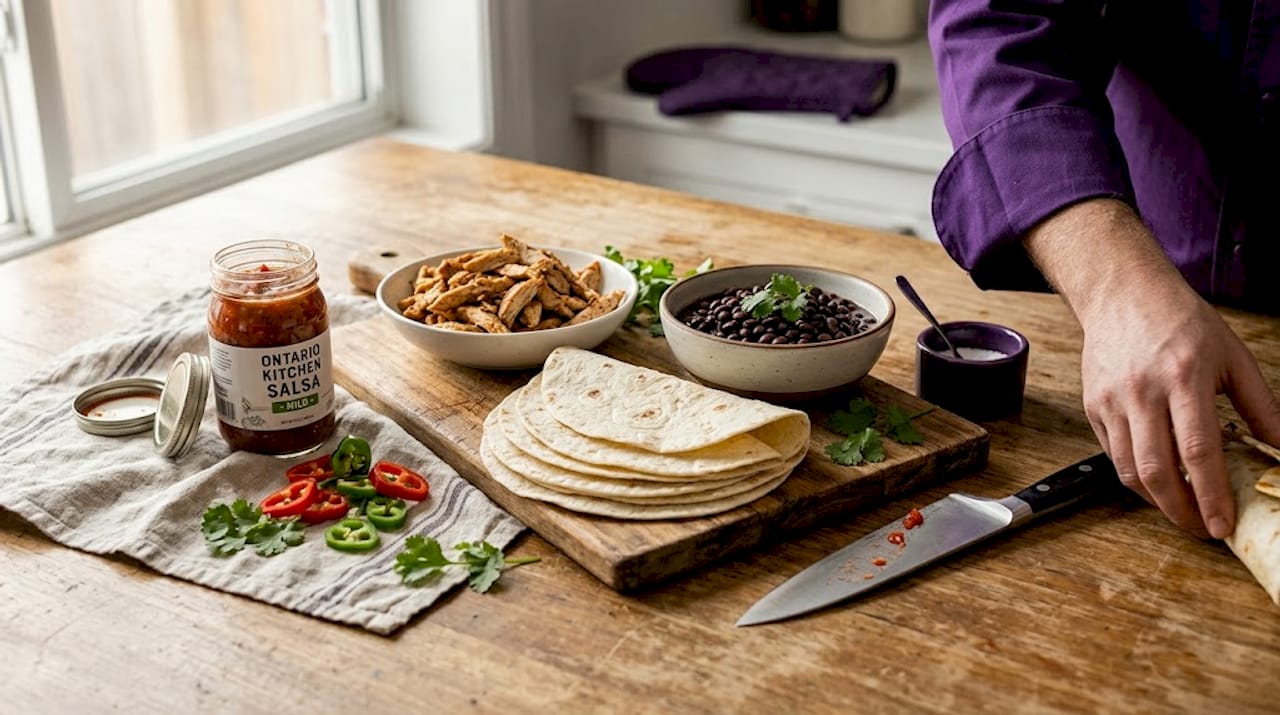
Before you fire up the stove, you need the right building blocks. Authentic burritos are beautifully simple at their core: a warm flour tortilla, a well-seasoned filling, and a handful of fresh toppings. The magic lies in quality, not complexity.
The essential components:
| Component | Traditional choice | Best Canadian substitute |
|---|---|---|
| Tortilla | Flour tortilla (lard-based) | Manitoba flour tortilla, pressed fresh |
| Protein | Pork carnitas or beef barbacoa | Ontario pork, Ontario or Manitoba beef |
| Beans | Pinto or black beans | Alberta-grown pulses (black beans, pinto) |
| Rice | White long-grain | Brown rice or quinoa for a healthier base |
| Peppers | Poblano, jalapeño | Local greenhouse peppers from Ontario or Manitoba |
| Cheese | Cotija or Monterey Jack | Bothwell Cheese (Manitoba-made) |
| Avocado | Mexican Hass | BC avocados or BC-grown limes for guacamole |
| Tomatoes | Roma | Local greenhouse tomatoes, Peak of the Market |
Understanding local Mexican ingredients and how they translate to Canadian sourcing is the first step toward a burrito that feels both authentic and grounded in where you live.
Optional add-ons to elevate your burrito:
- House-made salsa (roasted tomato, tomatillo, or mango)
- Shredded lettuce or finely sliced cabbage
- Pickled red onions
- Sour cream or a vegan cashew crema
- Fresh cilantro and a squeeze of lime
- Hot sauce made with Canadian-grown chillies
Kitchen tools you’ll actually need:
A large cast-iron skillet is non-negotiable for warming tortillas and searing protein. A sharp chef’s knife makes dicing onions, peppers, and tomatoes clean and fast. A rice cooker or medium saucepan handles your grain base. A heavy-bottomed pot or Dutch oven is ideal for slow-braising carnitas or barbacoa. Tongs, a wooden spoon, and a wide cutting board round out the setup.
Pro Tip: Soak dried Alberta black beans overnight in cold water before cooking. Drain and rinse them, then simmer with a bay leaf, a halved onion, and a pinch of cumin for 60 to 90 minutes. This method produces beans with far deeper flavour than canned, and they hold their texture beautifully inside a burrito. If you’re short on time, canned beans work fine. Just drain and rinse them thoroughly, then warm them in a small pan with a drizzle of oil, garlic, and cumin before using.
The art of the burrito is really about respecting each ingredient. When you start with quality Canadian produce and proteins, the seasoning does less heavy lifting because the base flavours are already there.
Step-by-step: How to make truly authentic burritos at home
Now that you’ve gathered your tools and local ingredients, here’s exactly how to bring it all together. This method follows traditional Northern Mexican principles: keep it simple, season well, and let the filling speak for itself.
-
Cook your beans from scratch (or prep your canned beans). If using dried Alberta black beans or pinto beans, drain your soaked beans and simmer them until tender. Season with salt only in the last 15 minutes to keep the skins intact. For refried beans, mash cooked beans in a pan with a small amount of oil, garlic, and cumin. Avoid loading them with lard. A light touch of oil gives you that creamy texture with far less saturated fat.
-
Prepare your protein. For carnitas, season Ontario pork shoulder with cumin, oregano, garlic, orange zest, and salt. Braise it low and slow in a Dutch oven at 160°C for three to four hours until it pulls apart easily. For a vegetarian version, spiced beans with chipotles in adobo sauce deliver a smoky, satisfying depth that rivals any meat filling.
-
Cook your grain base. Brown rice or quinoa adds fibre and a nutty flavour that white rice simply cannot match. Cook your grain in broth instead of water for an extra layer of savoury taste.
-
Roast your peppers. Place greenhouse peppers directly over a gas flame or under your broiler until charred on all sides. Transfer to a sealed bowl for 10 minutes, then peel, seed, and slice. This step takes five minutes but transforms the flavour completely.
-
Warm your tortillas properly. Place each tortilla directly on a dry cast-iron skillet over medium-high heat for 30 to 45 seconds per side. You want light char marks and a pliable texture. Never microwave your tortillas. The steam makes them gummy and prone to tearing.
-
Assemble with restraint. Lay your warm tortilla flat. Add your filling down the centre in a line, leaving at least 5 centimetres clear on each side and at the bottom. Less is more. Overfilling is the number one reason burritos fall apart.
-
Roll with confidence. Fold the bottom edge up over the filling, tuck it tight, fold in both sides firmly, then roll forward in one smooth motion. Place seam-side down on your skillet for 30 seconds to seal it shut.
A burrito built with fibre-rich beans, roasted vegetables, and a quality protein source can deliver over 17 grams of protein and 16 grams of fibre per serving, making it a genuinely balanced meal rather than an indulgence.
Pro Tip: If your tortilla tears or the filling is too wet, skip the wrap entirely and serve everything as a burrito bowl. Layer grain, beans, protein, roasted peppers, and fresh toppings in a wide bowl. You get every bit of the authentic Mexican flavour without the structural stress.
Balancing authenticity and health: Canadian adaptations
The next step is making sure your burritos fit your health and taste goals without losing what makes them real. There’s a persistent myth that eating healthy means eating bland. When it comes to burritos, that myth falls apart quickly.
A well-constructed Canadian burrito built with local pulses and vegetables delivers roughly 502 calories, 17 grams of protein, and 16 grams of fibre per serving. Compare that to a typical US-style fast-food burrito loaded with sour cream, processed cheese, and white rice, and the numbers shift dramatically.
Nutritional comparison: Canadian-style vs. US fast-food burrito
| Nutrient | Canadian-style burrito | Typical US fast-food burrito |
|---|---|---|
| Calories | ~502 | ~700 to 900 |
| Protein | ~17g | ~25g (often from processed meat) |
| Fibre | ~16g | ~5 to 7g |
| Saturated fat | ~4g | ~12 to 18g |
| Sodium | ~480mg | ~1,200 to 1,600mg |
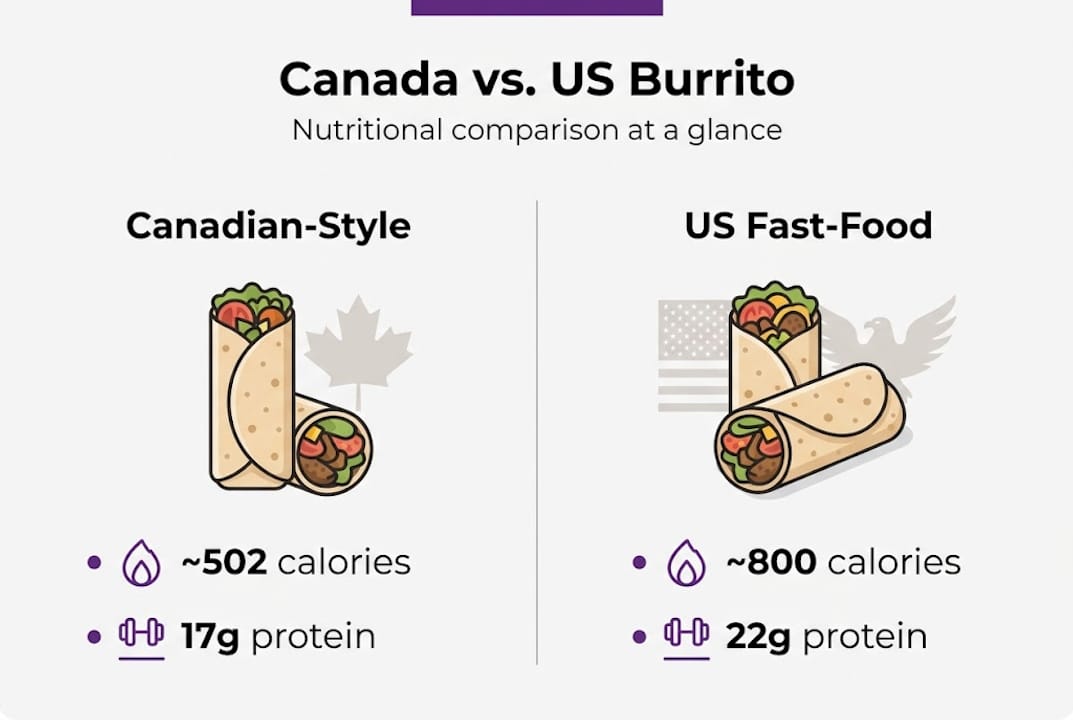
The Canadian version wins on fibre, sodium, and saturated fat by a wide margin. The trade-off is slightly less protein, but that’s easily addressed by adding a proper portion of beans, grilled chicken, or slow-braised pork.
Smart swaps that keep flavour intact:
- Swap white rice for brown rice or quinoa to add fibre and a nutty depth
- Use minimal oil when cooking beans rather than loading them with lard
- Replace processed shredded cheese with a small amount of quality aged cheese like Bothwell’s old cheddar, which delivers more flavour per gram
- Load up on roasted peppers, diced tomatoes, and shredded cabbage to add volume without adding calories
- Use a squeeze of fresh lime and fresh cilantro instead of heavy sauces to brighten every bite
Exploring plant-forward burrito options is one of the smartest moves a health-conscious Canadian cook can make. A bean and vegetable burrito is not a compromise. It’s a genuinely satisfying meal that happens to be excellent for you.
The sustainability angle matters here too. Choosing Alberta-grown beans, Ontario greenhouse peppers, and Manitoba-milled flour reduces food kilometres significantly. Supporting local agriculture keeps money in Canadian communities and ensures you’re eating food at its peak freshness, not produce that spent two weeks on a truck from California.
Regional authenticity: Mexico versus Canada’s burrito journey
Finally, let’s reconsider what authenticity truly means and how Canadian creativity fits in. The word “authentic” gets thrown around loosely in food culture, and burritos are no exception.
The true origins of the burrito trace back to Northern Mexico, specifically the states of Chihuahua and Sonora. The original burrito was small, simple, and humble: a flour tortilla wrapped around a single filling, usually beans, a little meat, or rice. No guacamole. No sour cream. No piled-high toppings. The large, overstuffed Mission-style burrito that most Canadians picture is actually an American invention born in San Francisco in the 1960s. The California burrito, loaded with french fries and carne asada, is another American creation entirely.
Common misconceptions about authentic burritos:
- Rice belongs inside a burrito (it does not, in the Mexican tradition)
- Guacamole is a standard burrito ingredient (it’s a topping, not a filling)
- Bigger is more authentic (the opposite is true)
- Cheese must be melted inside (traditional burritos rarely include cheese at all)
- Sour cream is essential (it’s a North American addition)
Canada’s food culture has taken these foundations and built something genuinely its own. We’ve swapped in regional burrito styles that reflect our climate, our agriculture, and our multicultural communities. Manitoba pickerel tacos, Alberta bean burritos, and Ontario chicken wraps are not lesser versions of a Mexican original. They’re a natural evolution.
Pro Tip: Focus on ingredient quality over strict adherence to rules. A burrito made with freshly pressed Manitoba flour tortillas, slow-braised local pork, and Peak of the Market tomatoes will taste more “authentic” in spirit than one made with imported, processed ingredients that technically follow a traditional recipe. Quality is the real rule. You can learn more about burrito history facts that might surprise you.
The evolution of the burrito across borders is not unlike how pizza transformed from a Neapolitan street food into a global canvas. Authenticity is a starting point, not a cage.
A fresh perspective: Why authentic burritos are about spirit, not strict rules
Having explored all sides of burrito authenticity in Canada, here’s our honest take. The loudest voices in food culture often police authenticity in ways that are more about gatekeeping than genuine respect for tradition. We disagree with that approach entirely.
Food has always evolved with the people who cook it. When a Manitoba farmer grows the wheat that becomes your tortilla flour, that tortilla carries something real and meaningful. When you use Alberta black beans instead of imported ones, you’re not diluting the recipe. You’re rooting it in the land where you live. That’s the spirit of every great food tradition.
The uncomfortable truth is that the “most authentic” burrito you can make in Canada is one built with the best local ingredients you can find, prepared with care and respect for the original technique. Following the local food journey is not a compromise. It’s a deeper form of authenticity, one that connects your meal to your community, your climate, and your values. Stop chasing a rigid definition. Start chasing great flavour with great ingredients.
Burrito Splendido: Authentic taste, sustainable quality in Canada
If you’d like to taste authentic burritos made the right way, there’s an easy next step.
At Burrito Splendido, every burrito starts with a house-pressed tortilla made from 100% Manitoba-produced flour. Proteins like Carnitas and Barbacoa are slow-cooked and hand-pulled in-house daily. Cheese comes from Bothwell, produce from Peak of the Market, and poultry from Granny’s Chicken. It’s the same philosophy this guide has outlined, executed by a team that’s been doing it since 2012.
Explore the local ingredient story behind every menu item, or check out catering options if you want to bring authentic, locally sourced burritos to your next event. Supporting Canadian producers never tasted this good.
Frequently asked questions
What makes a burrito ‘authentic’?
An authentic burrito typically features a simple filling of beans, meat, and local ingredients, wrapped tightly in a flour tortilla. Traditional Northern Mexican burritos contain no rice, guacamole, or heavy sauces.
What are the health benefits of using Canadian ingredients in burritos?
Canadian-grown beans and vegetables make burritos significantly higher in fibre and nutrients. A bean-based Canadian burrito delivers 502 calories with 17g protein and 16g of fibre per serving.
Can I make vegetarian or vegan authentic burritos?
Absolutely. Spiced Alberta black beans with chipotles, roasted peppers, and fresh vegetables create a plant-based burrito that’s deeply satisfying and entirely authentic in spirit.
What are common mistakes when trying to make authentic burritos at home?
Overfilling, using too many wet ingredients, and skipping the proper folding technique are the most common errors. Keep fillings lean and dry, warm your tortilla properly, and roll with firm, confident pressure.
How can I support local food producers when making burritos?
Choose Alberta-grown pulses, Ontario pork or chicken, local greenhouse peppers and tomatoes, and BC avocados or limes whenever possible. Shopping at farmers’ markets and local grocers keeps your food dollars in Canadian communities.
Recommended
- Craving Authentic Flavors? Why Burrito Splendido is the Top Choice for Mexican Food in Canada – Burrito Splendido
- The Art of the Burrito: How We Craft Canada’s Best Wrapped Meal – Burrito Splendido
- Farm to Fork: Why Local Ingredients Make the Best Mexican Food in Canada – Burrito Splendido
- Burrito Splendido